
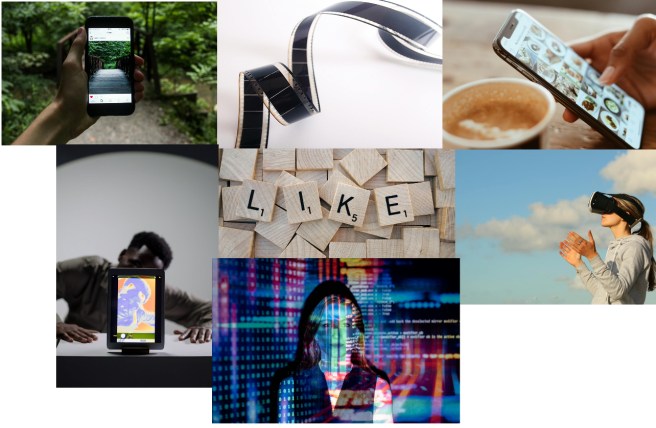
“I’m a mum, get me out of here!” That’s what the parent in me shouts in my head when I see how gadgets, social media, obsession with photo editing apps, counting ‘likes’, ‘views’ and ‘followers’ have made inroads and taking the centre stage in our children’s lives, and, for that matter into everyone’s lives. We are the first generation of parents facing this challenge and I envy my parents who didn’t have to grow those extra vigilance radars off their heads.
My grievances with the emergence of the cyber social space seem to be a never-ending battle. The Gen Zs and Generation Alphas are the ‘digital natives’ which means they are the first generation to have grown up with internet and social media from childhood. The generations preceding them up to the Millennials have experienced the pre-internet times too which means parents of my generation are a witness to what I call a calamity- and a calamity of such a large scale and complexity that we know we are on the losing side. No matter how much we try and be positive about it, deep in our gut we fear that what our human race built slowly over thousands of years as a culture may soon crumble into oblivion. The socio-cultural matrix which evolved over generations is now going through a mammoth transformation. Unlike the changes which we witnessed in the past with the inventions of radio and telecommunications which acted as positive developments for our human culture and were welcomed into people’s homes with open arms, we just can’t say the same about the development of the virtual social media culture. The virtual domain took off vertically in a very short span of time and made itself not only functionally indispensable but also went beyond to getting people addicted to it.
Social media has dramatically changed human communication and interactions. The virtual world is running parallel to the real world and on many occasions even replacing the real world. Relationships are made and unmade on the virtual platform. People come into existence and are deleted from lives with a swipe of a finger. Hugs are replaced by emojis. Easy! No uncomfortable face-to-face confrontations. No reading facial cues. No looking into the eyes and searching for answers. People are accessible and ‘on’ all the time, yet may be very far from real intimate connections and the growing gaps too big to fill!
I can’t help but think that we are literally in a virtual game called ‘Maya’- the illusion. Maybe the ancient Indian seers had coined the term Maya in anticipation of what they had foreseen in their transcendental states about modern technology! Humour is probably the only way to distract our poor souls away from this invincible villain in our lives. Many might think that ‘villain’ is a strong word and I’m waiting for the light to shine to take me out of this despondency. This baddie ever so slowly and stealthily creeped in and seized our lives. Yes, I’m taking the full blame of allowing it, however, it was almost at gun point that I had to give in. I had managed to ward off the then ‘guest’ from my children for the longest time possible- they did not grow up playing video games (hope the big brands and their fans won’t ban me for this). I did not carry any device during our travel or social visits to keep my children occupied, not even any play apps on my phone. To this day, we don’t bring any phones to the dinner table in my house and my children never felt the need to challenge that. To me, using gadgets to keep young children distracted or occupied for our convenience is cheating our way out through parenthood. As a child, when we travelled on train, I used to sit by the window and get amused for hours together watching the world pass by. The changing rural landscape, the people going about their daily life, the livestock, the train tracks, how the long train curved at both ends sometimes, the steam puffing up from the engine etc gripped my senses. We didn’t have gadgets to explore, so we explored the world. The developing brain is like a sponge which is thirsty for experiences to build its neural connections. I wanted my children’s neural connections to be facilitated by first-hand life experiences and not through the screen.
However, that was when their age permitted me the luxury. When they entered secondary school, I found myself being increasingly helpless. I had to give in to give way to the pervasive gadget force and the scary thing is that it was there to stay. My children’s peers were already into social media way before their age permitted and I had to finally succumb to ‘But she’s also got it!’ protests. Social media apps took this generation by storm. Snapchat, Instagram, Facebook, BeReal, TikTok, Twitter and other line ups of names which are nothing but the many faces of this new fixation. Social media is not bad in itself, much like how alcohol is not evil in itself- it’s in how we use it.

Let’s take a look at the many ways the social media phenomenon has hijacked our phenomenal life we once had:
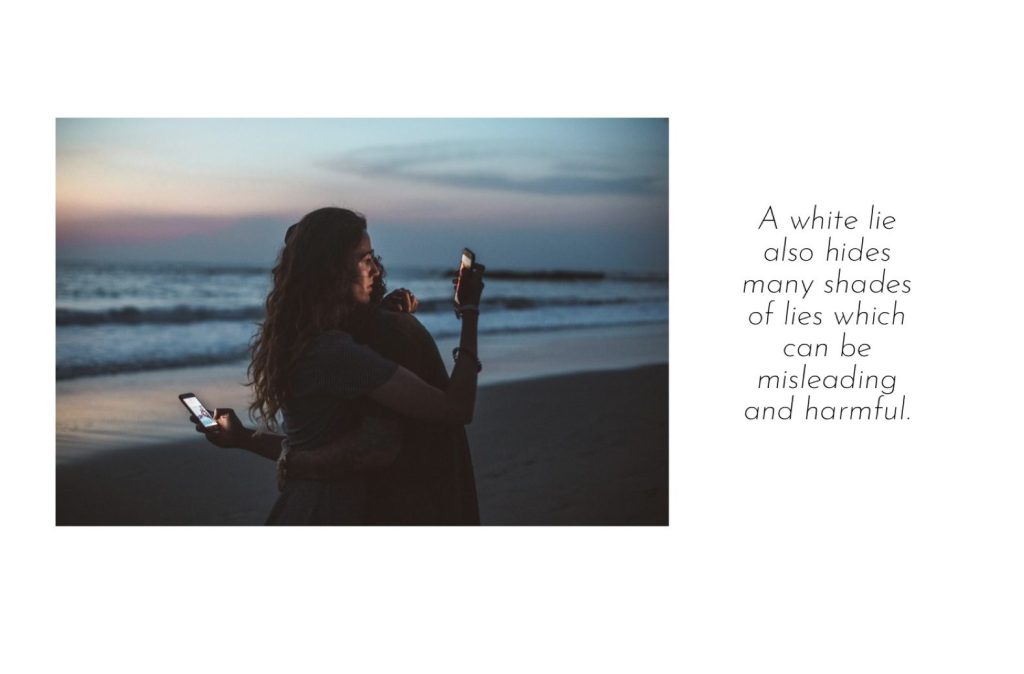
1. Reel reigns supreme: Reel lives have become the status quo. Social media is used less for ‘social’ reasons and more as a personal media platform where many people shout out their personal lives loudest. It’s a show window where we see displays of people’s wardrobes, pantry, house, car, friends, family, pets, achievements, holidays and the list goes on, not to forget the displays of emotions- pain, anger, sorrow, love and yes, fake love. It is sad to see how social media can harbour and breed lies. The dynamics of peer pressure, keeping up appearances, trying to fit in, people pleasing behaviour and narcissism are displayed at their highest on social media. People feel compulsively pressured by their societal environment to put up ornamental posts whereas behind the scenes may be an entirely different story. It’s a common notion that white lies are harmless, but just as there is a spectrum of different colours in white light, a white lie also hides many shades of lies which can be misleading and harmful. I’ve started seeing social media posts much like a movie where there are actors, scripts, costumes etc and after the movie is shot, the actors go back to their real lives. Social media promotes the rise of an exhibitionist culture where things from breakfast-pancakes to midnight sweet nothings are displayed. And the catch is that the displays are often the edited glammed up snap shots. The need for pompous show and attention can reign supreme often at the cost of authenticity. Photo albums from our living rooms which before only people visiting us physically were privy to are now in the virtual rooms for the public to view.
2. No empty space: In the past people could leave behind their social circles, come home into their private space where they could unwind and have quality time with their families or themselves. That’s history now. When I was first added into a virtual media group, I was highly overwhelmed, partly because I can be an introvert and as much as I enjoy spending time with people, I highly savour my private uninterrupted space which acts as my fuel and recharges me. Being part of the group chat felt like I was being with a room full of people all the time- even in my bedroom which was supposed to be my quiet space. The crowd never left! It exhausted me. I did not know how to leave those groups and so remained as a silent entity in the groups. Even for those who are not introverts, the continuous influx of messages; being reachable and accessible all the time can be draining. The dynamics in social media groups can be extremely complex. In the physical life, not being part of an event or group, is easy- just don’t sign up or politely decline the invitation; whereas, on online platforms, the quieter and reticent members can be equated to being rude or arrogant and looked at with disdain.
It is necessary to be mindful of social media codes of conduct. Expecting others to always be available, can feel like an infiltration of personal space and when someone tries to exert their boundaries, others feel they are being rude or ignoring them. Being connected to our family and close ones, sharing locations with our children to ensure safety etc are all a welcome addition of the technology to our lives (although that too has a caveat), we however, do not need to be connected and available to the wider world 24/7. We need to reap the benefits of the internet, not be enslaved by it.
3. Three is a crowd: Having an exclusive 1:1 time with our close ones have become nearly impossible until and unless we turn off our phones. It can’t be more frustrating than meeting someone face-to-face and the other person is not entirely there – they are sending/responding to texts or making/answering calls while you are staring into space trying hard not to avenge this bad behaviour by picking up your phone too. You don’t want to become them. There can indeed be a genuinely urgent or unavoidable reason for this behaviour; however, more often than not, people indulge in this kind of ‘double-timing’ because of several reasons, some of which are as follows:
- Plain insensitivity.
- Unable to control the compulsive need to attend to social media- in other words addicted to social media.
- It offers ego boosting benefits from the perception that we are important when we look busy.
- The FOMO effect- the fear of missing out. Wanting to be omnipresent.
- Wanting to please people, not knowing how to say ‘no’ and exercise healthy boundaries.
- There is a hidden agenda (to ignore or be plain nasty to the other person).
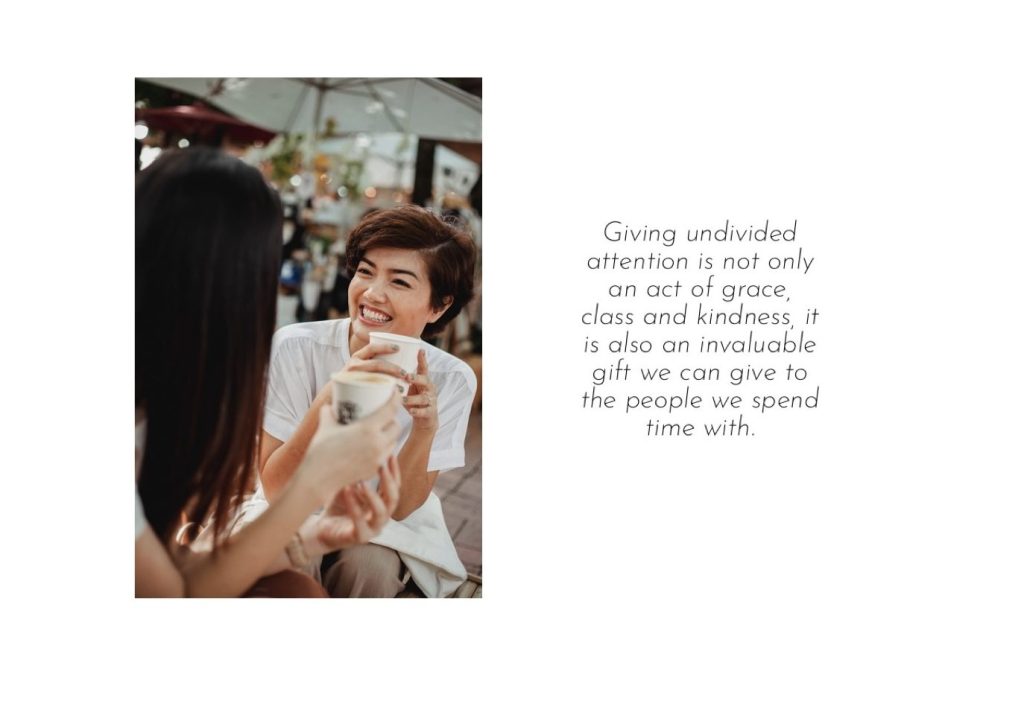
The risk of losing the exclusive in-person contact times with each other are high in our world today. Only the very self-controlled, self-aware and sensitive individuals will manage to retain the ethics of social interactions in the highly volatile digital sphere. Giving undivided attention is not only an act of grace, class and kindness, it is also an invaluable gift we can give to the people we spend time with.
4. The partial story: Communication on the virtual media is a huge challenge. The physical or non-verbal aspects of communication such as facial expressions, gestures, tone of voice, laughter, smiles etc which is present in face-to-face communication and which carries pertinent meaning is entirely missing on texts and typed chats. At some point, typed messages can feel laboured, mechanical and frustrating as the non-verbal add-ons and props which reinforce and scaffold communication, are absent. Emojis and emoticons try to fill that gap but do not suffice. The gaps are therefore, left to be filled up purely by our assumptions and perceptions which, more often than not, may misfire. We all must have felt the limitations of virtual conversations- of being severely misunderstood and our messages misinterpreted. The spontaneous flow of a conversation is missing. In video calls, we can’t physically comfort the other or show physical expressions of love. It can feel superficial and isolating. Although the opportunities to connect are more on online platforms, the frustrations arising out of the limitations of virtual communication are also more. Increased quantity of communicative episodes does not necessarily mean increased quality of communication.
Virtual communication platforms are no doubt an indispensable part of our lives and rightly so, however, we should be wary of over-reliance on digital communications. When deeper communication is warranted, the limitations of virtual platforms stare at our face as they fail to pick up on nuances required for meaningful and deeper connection resulting in increasing frustration and damaging connections. Although digital platforms may be a great medium of communication, they can’t replace the experience of a shared physical time and space – where we are physically together with our loved ones and can hold their hands.
5. At the mercy of our fingertips: Virtual communication can also feel powerless as we are not only at the mercy of technology but also at the other person’s fingertips who may end or leave the conversation anytime while we stare helplessly at a blank screen, most often highly confused and wondering about what went wrong. Repairing or restoring the communication at once may not be possible. Virtual platforms have rendered the dynamics of our relationships more fragile than ever. Relationships can be made or broken on chats and texts, which in my opinion, is unfortunate.
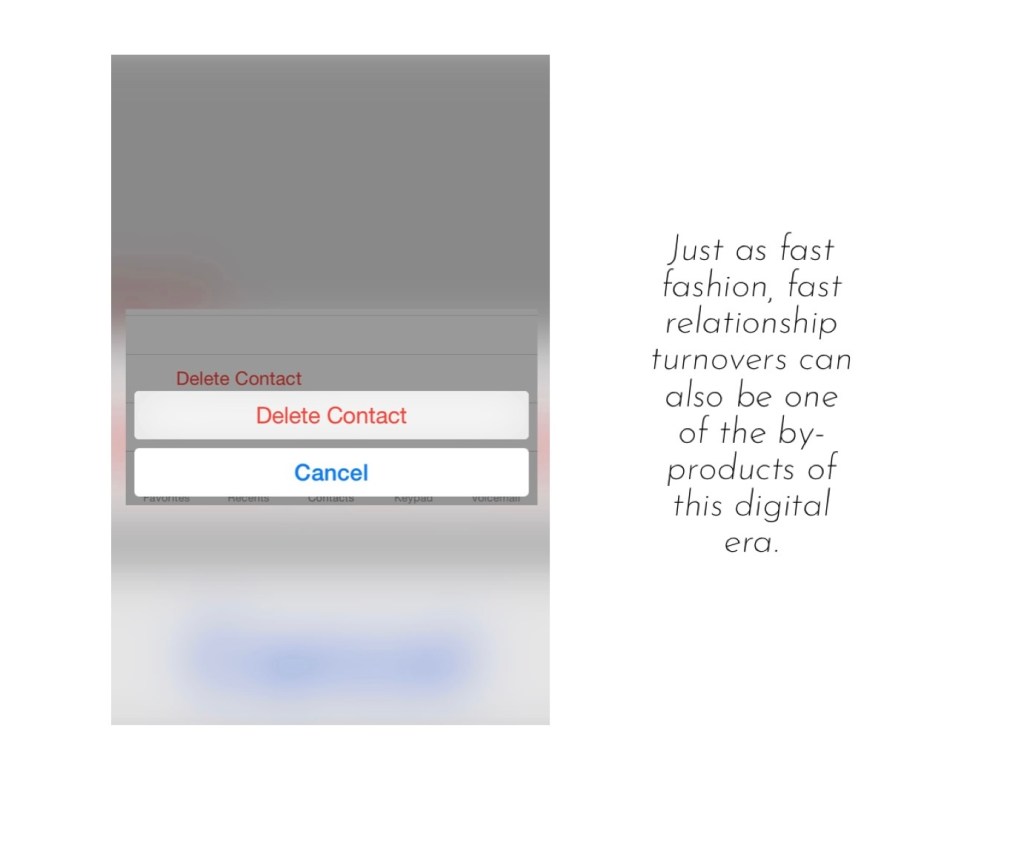
Just as fast fashion, fast relationship turnovers can also be one of the by-products of this digital era. As much as we need to keep the forces which do not align with our inherent values out of our lives, we also need to be wary of acting on impulse and removing people out of our lives without giving the other person the chance to explain their actions or correct their mistakes.
6. The number game: life is more than mere numbers and networking. Unfortunately, the number of friends, followers, contacts and likes one has on virtual platforms, has very little to do with real connections. Nurturing genuine social relationships demand much more than just an online presence.
7. Productive time lost: The other grave aspect of this gadget-heavy-era is the time consumed. This devil knows the trick- the only way to destroy humanity is by taking away their ability to be productive and creative. The best way to do this is to take away time spaces of boredom. Boredom breeds creativity and invention. No empty time, no boredom, no thirst for innovation. The slow idyllic life has seen its days and has been replaced by the fast pace life held by the information technology matrix. We are advancing outward in technology, which is needed, but on the other hand, are humans getting less connected with their inner selves, leaving residues of chaos and mayhem within?
8. Selective literacy: In this social media dominated world, ‘digital literacy’ is important but is it creating an imbalance and taking away the time we need for ‘life literacy’? Our children are gaining expertise in navigating the e-technology but are they getting enough opportunities to develop skills in navigating the real life? Is there enough time to engage with the real world? The real life seems to pass by whilst our children’s eyes are peeled on their screens. The real life remains suspended somewhere. They are rooting for ready-made solutions and quick fixes available online and not trusting that the real learning is only churned out from real hands-on life experiences.
9. Are we making healthy choices?: Online activities have possessed children worldwide. Children stay holed up with their devices until late in the night. Their bedtime is getting pushed further and further into the night depriving them of restful sleep which is organically needed for their cognitive, emotional and physical development. As a speech and language therapist, I come across secondary school-aged children of which typically boys are obsessed with online gaming and girls with online videos and chats. They commonly report being ‘tired’ at school and when I ask them about their evening routine, most of them report being on their devices in their rooms well until 10-11pm. Some of them even later than that. Being on their gadgets also captures a big proportion of their weekends or holidays. I hear them complaining about interrupted sleep patterns, waking up unusually early despite sleeping late or not being able to get out of bed in time for school or university. Being exposed to the screen around bedtime does not allow the brain and the body to unwind and prepare for restful sleep. Children’s mental, emotional and physical wellbeing are at a high risk and it’s no surprise that overall children’s health issues are on the rise, particularly issues related to their mental health and attention.
10. Attention span less than a goldfish?: Whether the statistics for attention span are reliable or not, for all of us who are old enough to have experienced the pre-digital era, it’s no rocket science to compare and know the challenges the digital distractions pose to our attention span and patience. According to researcher and author Gloria Mark at University of California, people’s average attention span to a single screen way back in 2003 was 2.5 minutes and between 2016 and 2019 we were around 47 seconds. As I am writing this, I wonder how many people have had the time and focus to even have read this write-up up to this point. Well again, people may argue that there are multiple confounding factors, such as cognitive skills, personalities, nature of tasks etc which impact attention span, however, intuitively we do know that we are subject to a digital burn out.
There have been reports of a considerable increase in referrals for ADHD (Attention Deficit Hyperactive Disorder). Centre for Disease Control and Prevention (CDC) in US reports a 10% increase in prescription medication for ADHD both in men aged 25-44 and women aged 15-44 in the last year. The reasons could be many, from increased awareness about ADHD leading to increase in self-identification, assessment and diagnosis (which is a good thing), to the impact of digital overload.
11. Instant gratification: Our brains crave the constant dopamine rush which screens give us and therefore, we bounce from one online app to another receiving instant gratification. Overall, we have become a high stimulation seeking population, so much so that even outside the digital realm, children and teenagers are continuously seeking to be always doing something exciting leaving parents overwhelmed and feeling pressured to satisfy that need. And god forbid if that need is not met! Parents either way suffer in relentless guilt. The world now seem to always be at a saturation point ready to explode at the drop of a hat. Unless our education systems and governments realise the extent of harm from this digital threat, and we as individuals or as parents do not take measures to prioritise our and our children’s wellbeing, this time bomb will be ticking away and this risk, is not virtual.
12. Virtual bullying: Although choosing our digital presence is a choice we make; it nevertheless can’t justify bullying and its impact. Social media can be a haven for psychopathic, narcissistic and passive-aggressive behaviour. It’s sad but true that people use social media to fight their interpersonal conflicts and a seemingly innocent cheerful post could actually lack compassion and have a hidden agenda to intentionally exclude people. Toxic battles and wars are fought on social media. Cyberbullying or online harassment in the form of ostracism, trolling (derogatory or back handed remarks), groupism, shaming etc which can follow us and sadly our children into not only their bedrooms but into their very core scarring them severely.
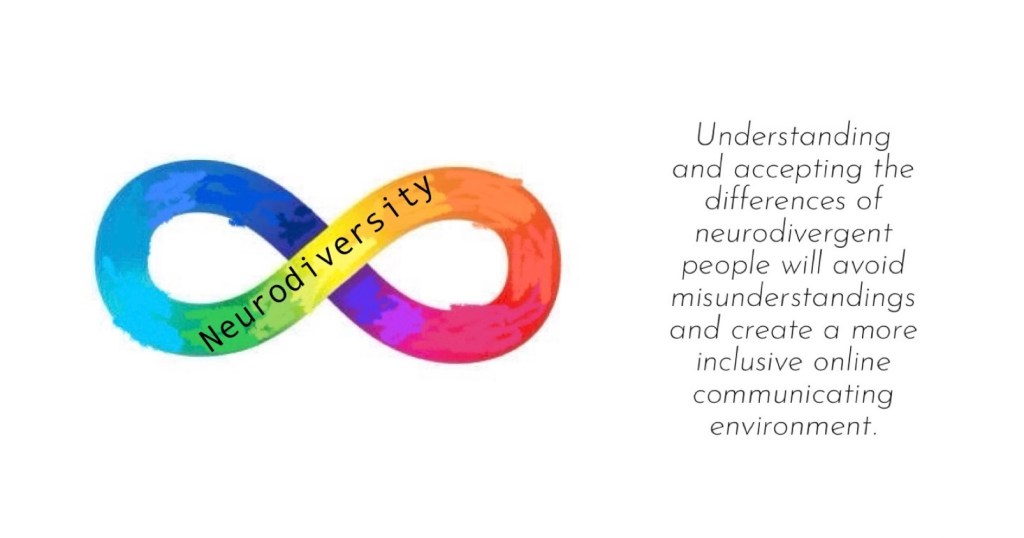
Moreover, the neurodiverse population are highly vulnerable to being excluded or bullied based on their individual differences and communication styles. The neurodiverse communication styles can differ from neurotypical communication styles e.g. a neurodiverse person may have a more direct style of communication, may be more literal (they say what they mean and mean what they say), may like deeper conversations and may find doing small talk challenging amongst many others. Understanding and accepting the differences of neurodivergent people will avoid misunderstandings and create a more inclusive online communicating environment.
13. Not always a safety net: In this hyper digital world, children’s safety can be at stake. With more and more younger children drawn to this digital net, it’s getting increasingly hard to supervise children’s online activities. Children are highly vulnerable to the risks of sexual predators, explicit content, violent content, misleading information and radicalisation on virtual media. To emphasise this point, I would like to mention here that currently, whilst I am finishing off the final draft of this write up, UK is experiencing one of the worst riots in decades across England and in Northern Ireland fuelled by false online information following the fatal stabbing of three young girls in Southport on 29th July 2024. Multiple social media influencers were found to be involved in rapidly kicking off the violence nationwide and bringing about an atmosphere of insecurity through rumours and fear-mongering.
Furthermore, the highly image conscious and peer pleasing world of the teens are already riddled with the many challenges- they are highly suggestible, experimental and risk takers. This makes them extremely vulnerable to follow unhealthy trends from make-up addiction and fast fashion to vape addiction. The industries target the youth through their clever marketing portraying their products as ‘cool’. We all know how the vape brand Juul had caught on with teenagers in the US like fire in a span of a month before the FDA and parent bodies were aware of the damage already caused- courtesy social media. Children as young as 11 years old were addicted to nicotine like never before and easily finishing off one pod a day which equalled to the nicotine level of 20 regular cigarettes. The statistics are worrying.
United Nations Convention on the Rights of the Child (UNCRC) recognises the right to digital literacy and the right to access digital information as a vital need however, digital safety and protection online is also a stated need. Safeguarding and child protection systems need to think fast and evolve ahead of the growing challenges of the digital era, else the wellbeing of our world’s future will be hugely compromised.
14. The NET ball: much the same way face to face human interaction is facing a threat from virtual domains, face to face play activities are also being replaced by gadgets at an alarming rate. As a professional working with children, it worries me to hear how much time children are spending on screen. From my experience, boys are particularly into online gaming and girls into social media stuff. Their after-school hours, evenings, weekends and holidays are spent on online activities. The latest versions of online games are on children’s birthday or Christmas wish list. Others may argue that in online gaming or chatting, interaction is happening as it’s still a two-way communication, but in my opinion, virtual domains are a very controlled domain with the natural elements missing. On screen play activities are highly scripted, robotic, mechanical and missing the naturalness of play. Riding a bike on screen is very different to physically riding a bike on the street. Important life skills like solving people problems, emotional literacy, awareness of others, spontaneity, flexibility, understanding nature and its dynamics- which are only developed through physical play and in-person interactions is hugely redundant in a world of online play. Those faculties of soft skills in our brain is at a risk of being underdeveloped in the future generations and be replaced by the more technical and factual skills. Organised and online sports are continuing to become sophisticated whereas, real time idyllic free-play is losing its significance in the gap-less online world.
Children learn and thrive through play- that’s the only way they can. What objects we place in their hands to play with, is therefore, important. For one of my work projects, I had interviewed staff members in a preschool in the UK. The one observation and worry which was expressed by almost all the interviewees was the increasing trend of children enrolling in the pre-school with language skills below that expected of their age. The staff members attributed that to high engagement with gadgets from an early age thereby reducing opportunities for meaningful live interactions and free play. To add to this observation, during the COVID-19 pandemic lockdown, quite a few parents contacted me with concerns about the language development of their pre-school aged children who were otherwise reported to be developing well in other areas. Much to their relief, many of these parents reported improvement in language skills in their children after they followed the advice given to them based on increasing parent-child play based interaction opportunities and modelling of language. During the lockdown, social interaction was minimal and boiled down to opportunities only in the household. In many households, with both parents working, providing an interaction-rich environment and catering to the developmental needs of children in their early years was a huge challenge which, unfortunately had a backlash on the children’s language and social communication development. Fortunately, many of these children, have now bridged the gap with the support from their parents. This only reinforces my belief that real time human interactions are hard to replace without having damaging consequences.
Is it all doom and gloom?
I would like to believe that the answer is no, because I believe in the creative potential in humans to awaken and align themselves on the right path. I remind myself that instilling fear does not help and looking at things objectively is the best way forward. The importance of social media in our lives is paramount. The first step towards helping ourselves, is acknowledging that the digital world can be addictive. The benefits of the digital sphere will continue to be significant only when it is responsibly used. The cyber space has changed the way we work drastically. We can work remotely from the comfort of our homes, have more flexibility to accommodate childcare, minimise commute and go paperless. During the COVID-19 pandemic, virtual technology was indispensable- helped us to keep connection with our families and friends and allowed work and education to carry on: in other words, digital technology came alive and kept us sane and functioning during the pandemic when the physical world had shut down. And that’s when technology is helpful- to bridge gaps and create meaningful connections; not to create gaps or replace meaningful engagement with real life.
The positives of social media are plenty but only if we use it thoughtfully, ethically, without pretence or misleading others and with integrity. Social media is useful when people use it to raise awareness, to give information to help others, share meaningful/inspirational messages, promote a business, promote community/cultural events, share creative content or connect with our loved ones near and far. We all ought to follow the social code of conduct on virtual media.
Below are some tips for maintaining healthy digital habits and social media conduct:
- Respect personal boundaries and preferences for availability. Do not expect others to always be available online or respond to your texts at once. Respect yours and others’ commitments, schedules, routines, bedtimes, etc.
- Keep healthy digital footprints. Remember that your and others’ privacy matter.
- Bullying or trolling is not acceptable in any space. Do not deliberately post/comment to upset or exclude others. Be compassionate and sensitive to others when posting content online. Refrain from back handed comments, sarcasm, insults or posts with hidden hostility.
- Be honest and genuine in your posts. Ornamentation of posts and your onscreen presence at the cost of authenticity is not cool. The damage caused by misleading, superfluous and inauthentic expressions on digital platforms are long lasting due to their wider reach. Monitor your online communications for adaptive vs authentic behaviour. Developing authenticity and identifying your values is a big area to explore, but worth the commitment to your self to help surf the multiple challenges of this social media age.
- Refrain from being rude and disrespectful to others by being on your phone when you are on a date or on a planned meeting with people. Resist the urge to check your phone unless in an emergency. Remember, human beings lived and got things done even before the invention of mobile or smart phones.
- End conversations responsibly. Ending or leaving virtual chats/conversations abruptly without warning when you disagree or are upset, is immature and rude.
- Be mindful of people’s differences. The neurodiverse population is a huge spectrum. Understand their individual preferences and communication styles to create an inclusive real time or online communication environment.
Technology is indispensable in our lives. It is what our magnificent human brain is capable of to make life easier, safer and efficient. We need to keep the bigger picture in mind and not allow our own creations to be the cause of our demise. The author, Neal Donald Walsh once wrote, “Human beings are not evolved enough to handle their own technology’ and it couldn’t have been more apt. History has shown time and time again that humans are not great at regulating their sensory needs and fall prey to the chemical waves in their bodies, be it dopamine, adrenaline or the various other hormones.
To reap the benefits and not be a victim of our own creations, we have to take a step back, be sensible and not be driven by compulsion. Private lives, private emotions or private moments are beautiful. Private spaces are not only meant for the dark or secret content. The value in personal and private lives should not be forgotten. The good old ways are not always outdated. We all have a need to share aspects of our lives with others but let that be privy to our ‘near and dear ones’, just the way people used to in the past. We’ve all been guilty of giving in and flowing in this virtual stream, only to wake up feeling overwhelmed. The virtual world is only some twenty odd years new to us of which social media and smart phones have been around for even less time. We are still learning how to navigate in this virtual sphere, keep our children safe and avoid digital burn outs. The challenge will be to not let this addiction for instant gratification and dopamine rush of the ‘Maya’ world take an upper hand on humanity. The online platform can be used to mankind’s advantage by spreading helpful and positive content. Let our value as a person not be defined by the number of followers, reactions, likes, engagements and hits on the digital platforms. Let the reel not replace the real.
Thank you for reading.

 ShowerScape
Very insightful and well articulated. Very importantly it is important to start the dialogue about the ethics of posts on social media and also discuss about neurodiversity!
LikeLiked by 1 person
Thank you Jayanta, I’m glad you liked it. Yes, more discussions and dialogues will be helpful
LikeLike