Life and change are synonymous. The present slips through our hands while we fix our eyes on the horizon. 'Now' is all I have and the present is what I want to honour.
While looking young is glorified,
Being forever 18 is the addiction,
The future generations will soon forget
How the bare and brazen can be beautiful,
How the imprint of the years add value,
How the skin grows old too.
Telltale strokes of needles, knives and brushes,
Will rule the image conscious masses
Gone will be a population
Of how we naturally would look as we aged
Replaced by, oddly enough-
the same carbon copies,
From the industry of ‘aesthetics’ well staged.
Suspended in the neither here or there,
Both age-wise and species-wise,
It’s not comical- but emerging is a new breed
Of synthetic human faces.
Glossed up veneer of strange looking versions,
Faintly resembling their past selves
The disproportionately plumped up cheeks and lips,
The creaseless plastic smiles,
Like caricatures I sketched as a child.
In a performance driven culture,
People giving in to fear over grace,
Where is the courage and wisdom that comes with age?
Parents and grandparents resisting to celebrate nature’s ways,
Instead, wishing life, like picture frames, to be frozen
What messages are we passing on to  our children?
The honesty of eye bags and sagging breasts
The bold glow of silver hair when moonlight on it rests
Sun’s golden hue emanating from the skin of experience
The comfort of the soft greys
Stories of time told by creases and lines-Aren’t they attractive, comforting and kind to the eyes!
Beauty is the art of letting go,
Trust that less is more.
Character is in living with integrity,
Exist fearlessly
Remove the shackles of the mind
Free your soul from traps which blind
Count not the years-
Those numbers won’t reverse
Time is just one dimension and linear
Rather, dive into depths far,
Bask in the values your present aligns with,
Unwrap the gifts the years did give,
Marinade in the blessings, experiences and friendships you’ve gathered,
Find meaning also in the old and the weathered.
Don’t resist, honour the change,
Stop living for reels and spotlights on stage,
Open your arms
Breathe and embrace your age,
Growing old is not a disease,
It’s far from doom and gloom;
Sink deeper
Allow your soul to bloom
We are nature
Like the trees, birds and bees
Listen to your core and flow
See how beautiful you are
When you freely and naturally glow.
I’m a Hindu,
I rose from the land of the seven rivers and more,
Don’t give me the name of religion
and stifle me.
I flow unrestraint,
I can’t be bound within a frame.

My gods are diverse
Just as nature is diverse
I pray to life in its myriad forms
The rivers, the caves, the trees,
The earth, the ash, the fire, the wind,
I bow down to the snakes, I worship the crops,
I meditate into ether.
The sound of conch shells at ceremonies,
The fragrance of sandalwood smeared on my Ajna, my the third eye,
Permeates through my house,
I adorn my crown with lotus of thousand petals,
With folded hands I pay my reverence to the sun, moon and stars,
My festivals celebrate all that I see
The seasons, seas and mountains are sacred to me.
I rejoice in the entwined energy of the masculine and feminine,
Shiva’s dance
Durga’s courage
I greet with a ‘Namaste’ -
And embrace the divine in you and me.

The creator, the preserver, the destroyer,
Is the cycle of life itself
And in my language,
I call it Brahma, Vishnu and Maheshwara
Don’t label me as organised
I evolve
I change
I’m not neat
For the sound of the Aum is even in the chaos
In the dualities
In the micro and macro
In life, death and beyond.

I’m a Hindu
I’m a survivor
Whose ancient temples and Vedic verses,
Survived the wrath of hammers and alms in kind
The body can be slayed, morphed, seduced or shamed,
But the spirit of my land cannot be chained.

I sail through time, through generations,
I travel with pride through the genes.
I cannot be initiated into,
I cannot be expelled out of,
I’m made of this soil-
See it in the colour of my skin.
Its rivers run in my veins,
Its earth play with my hands and feet,
Its sounds reside in my soul,
Its language gives me a voice,
Its dance I rise to,
Its music I dive into,
The vibrant earthy hues
Paints my dreams,
I’m known to be eternal;
I am expansive
Don’t slam narrow religion on me.

I’m a Hindu
Born out of the land of the yogis and mystics
Where yoga, Ayurveda and mediation
Are not ‘alternate’ but practices core,
Where science is no different to spirituality,
Where there are no codes to follow-
But Dharma is unique to each individual- A personal choice,
Not enforced,
Where breath takes me inwards,
To meet the seven chakras of energy-
The rainbow which resides in me.

I’m a Hindu
Of the land of Bharat
Where ‘shoonya’- the zero, emerged
My traditions, fabrics, food,
stories and philosophies evolved from its elements,
Don’t box me into a religion.
It never was
It never will be.

I am fearless
I bow down in your places of worship
Just as I welcome you to mine
I see God in my guests,
Nothing threatens me,
Nothing makes me small,
I’m safe within me
So I change with times
I question rules that don’t serve me,
I don’t raise swords to assert my worth,
But won’t stop to defend when attacked
The courage of Durga,
The fire of Kali,
The love of Krishna,
Are energies which make me
I’m secure in my fluid identity
No rules to dim my light
Rather, like a princess I adorn myself to my heart’s delight
I embrace you, I embrace all
I’m a natural heritage,
Unique and native to my land
Preserve me,
I’m not a threat,
See the beauty of variance in me.

I’m a Hindu
You can find me in the soft delicate
folds of a saree,
In the crimson of a sindoor,
In the jingles of bangles and anklets,
I’m seeped in the aroma of the jasmine,
In the glow of incense sticks and oil lamps,
In the petals of the lotus,
In the cascade of the monsoon,
In the wet fields of paddy,
In the taste of dal, roti, ghee and kheer
In the vessels of clay, copper and silver
In the jingle of the Ghungroo to the beats of the tabla,
Interlaced in the strings of the sitar,
In the melody of the ragas and taals of Dhrupad,
In the erotic stone sculptures on temple walls,
In the sticky clay idol risen from the riverbed.

You will hear me in the ripples of Ganga,
Feel my obeisance in the frozen white of the Himalayas,
My defiance in the scorching sands of Kutch,
My roar in the waves of the Indian Ocean,
My echo from the Dakshin ghats,
My breath in the lush North East,
Don’t see me as your version,
Don’t trick me into using your words,
I’m not a pagan,
I’m broader than the ‘-isms’
I’m above the right and left,
Raw and barefoot is my stance on the throbbing earth,
I’m not a religion
I’m a Hindu
I’m a culture,
Let me be.
I’m a woman
They defile my right to live freely
They think they can tell me how to think, dress and be
They want to contain me with rules,
Chain me with seen and unseen fears
They fasten my wrists and feet with their scriptures
Bind me with their customs,
They think what wins my heart are big mansions and ornaments exquisite,
Only if they knew that the shine of gold,
is still a cage which holds me captive.

I’m a woman
I’m not safe
They worship clay goddesses with utmost reverence,
But violate my living body
They bow down to goddess Durga at her feet,
And tower over me to dominate and defeat
They drape stones, marbles and books with magnificent fabrics and jewels,
And disrobe me against my cries with their might and muscles.

I’m a woman
They tell me how I should look
They shame my face and body,
Which don’t fit their standards of beauty
They tell me not to be loud
Not to resist
Not to be heard
Not to have eyes dreamy
They’d rather that I hide myself and crumble
Than rise to the proud woman I can be.

I’m a woman
They stamp my status with a Miss, Ms or Mrs
Whereas the Mr remains a mister-ry
They ask me to give up my maiden name,
to show in marriage who they claim.

I’m a woman
My children don’t get my name
Although I bear them in my womb,
Birth them,
And feed them from my breasts
When I leave my village as a bride, my name is torn
Whilst the name of the man lives on.

I am a woman
They tell me to stay in a marriage come what may
Even if it makes me less
I’m blamed of being vile if I choose to step out of the wedlock,
To live my dreams
They want me to be a ‘good example’-
A happy face for photo frames.

I am a woman
They think I’m vain or unchaste,
When I choose to be single
They find me to be a threat,
An aberration
They scan me from head to toe
Looking for a “defect”
And exclude me from their heart.

I’m a woman
I’m more than my face and flesh
See my soul, see my spirit’s presence
See the fire in my eyes
The anguish in my heart
I’m not a battle to be conquered
I’m not to be tamed
See the devine in my femininity
Without which the Earth is not complete
My body is the Earth’s temple
Do not judge it
Do not ambush it
Help me to stand tall
Understand my choices
Respect my freedom
Above all,
Love me beyond my gender
I’m a living being
Bow down to the life in me
Love me skin to soul
Your God resides within me.
“I’m a mum, get me out of here!” That’s what the parent in me shouts in my head when I see how gadgets, social media, obsession with photo editing apps, counting ‘likes’, ‘views’ and ‘followers’ have made inroads and taking the centre stage in our children’s lives, and, for that matter into everyone’s lives. We are the first generation of parents facing this challenge and I envy my parents who didn’t have to grow those extra vigilance radars off their heads.
My grievances with the emergence of the cyber social space seem to be a never-ending battle. The Gen Zs and Generation Alphas are the ‘digital natives’ which means they are the first generation to have grown up with internet and social media from childhood. The generations preceding them up to the Millennials have experienced the pre-internet times too which means parents of my generation are a witness to what I call a calamity- and a calamity of such a large scale and complexity that we know we are on the losing side. No matter how much we try and be positive about it, deep in our gut we fear that what our human race built slowly over thousands of years as a culture may soon crumble into oblivion. The socio-cultural matrix which evolved over generations is now going through a mammoth transformation. Unlike the changes which we witnessed in the past with the inventions of radio and telecommunications which acted as positive developments for our human culture and were welcomed into people’s homes with open arms, we just can’t say the same about the development of the virtual social media culture. The virtual domain took off vertically in a very short span of time and made itself not only functionally indispensable but also went beyond to getting people addicted to it.
Social media has dramatically changed human communication and interactions. The virtual world is running parallel to the real world and on many occasions even replacing the real world. Relationships are made and unmade on the virtual platform. People come into existence and are deleted from lives with a swipe of a finger. Hugs are replaced by emojis. Easy! No uncomfortable face-to-face confrontations. No reading facial cues. No looking into the eyes and searching for answers. People are accessible and ‘on’ all the time, yet may be very far from real intimate connections and the growing gaps too big to fill!
I can’t help but think that we are literally in a virtual game called ‘Maya’- the illusion. Maybe the ancient Indian seers had coined the term Maya in anticipation of what they had foreseen in their transcendental states about modern technology! Humour is probably the only way to distract our poor souls away from this invincible villain in our lives. Many might think that ‘villain’ is a strong word and I’m waiting for the light to shine to take me out of this despondency. This baddie ever so slowly and stealthily creeped in and seized our lives. Yes, I’m taking the full blame of allowing it, however, it was almost at gun point that I had to give in. I had managed to ward off the then ‘guest’ from my children for the longest time possible- they did not grow up playing video games (hope the big brands and their fans won’t ban me for this). I did not carry any device during our travel or social visits to keep my children occupied, not even any play apps on my phone. To this day, we don’t bring any phones to the dinner table in my house and my children never felt the need to challenge that. To me, using gadgets to keep young children distracted or occupied for our convenience is cheating our way out through parenthood. As a child, when we travelled on train, I used to sit by the window and get amused for hours together watching the world pass by. The changing rural landscape, the people going about their daily life, the livestock, the train tracks, how the long train curved at both ends sometimes, the steam puffing up from the engine etc gripped my senses. We didn’t have gadgets to explore, so we explored the world. The developing brain is like a sponge which is thirsty for experiences to build its neural connections. I wanted my children’s neural connections to be facilitated by first-hand life experiences and not through the screen.
However, that was when their age permitted me the luxury. When they entered secondary school, I found myself being increasingly helpless. I had to give in to give way to the pervasive gadget force and the scary thing is that it was there to stay. My children’s peers were already into social media way before their age permitted and I had to finally succumb to ‘But she’s also got it!’ protests. Social media apps took this generation by storm. Snapchat, Instagram, Facebook, BeReal, TikTok, Twitter and other line ups of names which are nothing but the many faces of this new fixation. Social media is not bad in itself, much like how alcohol is not evil in itself- it’s in how we use it.
Let’s take a look at the many ways the social media phenomenon has hijacked our phenomenal life we once had:
1. Reel reigns supreme:Reel lives have become the status quo. Social media is used less for ‘social’ reasons and more as a personal media platform where many people shout out their personal lives loudest. It’s a show window where we see displays of people’s wardrobes, pantry, house, car, friends, family, pets, achievements, holidays and the list goes on, not to forget the displays of emotions- pain, anger, sorrow, love and yes, fake love. It is sad to see how social media can harbour and breed lies. The dynamics of peer pressure, keeping up appearances, trying to fit in, people pleasing behaviour and narcissism are displayed at their highest on social media. People feel compulsively pressured by their societal environment to put up ornamental posts whereas behind the scenes may be an entirely different story. It’s a common notion that white lies are harmless, but just as there is a spectrum of different colours in white light, a white lie also hides many shades of lies which can be misleading and harmful.I’ve started seeing social media posts much like a movie where there are actors, scripts, costumes etc and after the movie is shot, the actors go back to their real lives. Social media promotes the rise of an exhibitionist culture where things from breakfast-pancakes to midnight sweet nothings are displayed. And the catch is that the displays are often the edited glammed up snap shots. The need for pompous show and attention can reign supreme often at the cost of authenticity. Photo albums from our living rooms which before only people visiting us physically were privy to are now in the virtual rooms for the public to view.
2. No empty space: In the past people could leave behind their social circles, come home into their private space where they could unwind and have quality time with their families or themselves. That’s history now. When I was first added into a virtual media group, I was highly overwhelmed, partly because I can be an introvert and as much as I enjoy spending time with people, I highly savour my private uninterrupted space which acts as my fuel and recharges me. Being part of the group chat felt like I was being with a room full of people all the time- even in my bedroom which was supposed to be my quiet space. The crowd never left! It exhausted me. I did not know how to leave those groups and so remained as a silent entity in the groups. Even for those who are not introverts, the continuous influx of messages; being reachable and accessible all the time can be draining. The dynamics in social media groups can be extremely complex. In the physical life, not being part of an event or group, is easy- just don’t sign up or politely decline the invitation; whereas, on online platforms, the quieter and reticent members can be equated to being rude or arrogant and looked at with disdain.
It is necessary to be mindful of social media codes of conduct. Expecting others to always be available, can feel like an infiltration of personal space and when someone tries to exert their boundaries, others feel they are being rude or ignoring them. Being connected to our family and close ones, sharing locations with our children to ensure safety etc are all a welcome addition of the technology to our lives (although that too has a caveat), we however, do not need to be connected and available to the wider world 24/7. We need to reap the benefits of the internet, not be enslaved by it.
3. Three is a crowd: Having an exclusive 1:1 time with our close ones have become nearly impossible until and unless we turn off our phones. It can’t be more frustrating than meeting someone face-to-face and the other person is not entirely there – they are sending/responding to texts or making/answering calls while you are staring into space trying hard not to avenge this bad behaviour by picking up your phone too. You don’t want to become them. There can indeed be a genuinely urgent or unavoidable reason for this behaviour; however, more often than not, people indulge in this kind of ‘double-timing’ because of several reasons, some of which are as follows:
Plain insensitivity.
Unable to control the compulsive need to attend to social media- in other words addicted to social media.
It offers ego boosting benefits from the perception that we are important when we look busy.
The FOMO effect- the fear of missing out. Wanting to be omnipresent.
Wanting to please people, not knowing how to say ‘no’ and exercise healthy boundaries.
There is a hidden agenda (to ignore or be plain nasty to the other person).
The risk of losing the exclusive in-person contact times with each other are high in our world today. Only the very self-controlled, self-aware and sensitive individuals will manage to retain the ethics of social interactions in the highly volatile digital sphere. Giving undivided attention is not only an act of grace, class and kindness, it is also an invaluable gift we can give to the people we spend time with.
4. The partial story: Communication on the virtual media is a huge challenge. The physical or non-verbal aspects of communication such as facial expressions, gestures, tone of voice, laughter, smiles etc which is present in face-to-face communication and which carries pertinent meaning is entirely missing on texts and typed chats. At some point, typed messages can feel laboured, mechanical and frustrating as the non-verbal add-ons and props which reinforce and scaffold communication, are absent. Emojis and emoticons try to fill that gap but do not suffice. The gaps are therefore, left to be filled up purely by our assumptions and perceptions which, more often than not, may misfire. We all must have felt the limitations of virtual conversations- of being severely misunderstood and our messages misinterpreted. The spontaneous flow of a conversation is missing. In video calls, we can’t physically comfort the other or show physical expressions of love. It can feel superficial and isolating. Although the opportunities to connect are more on online platforms, the frustrations arising out of the limitations of virtual communication are also more. Increased quantity of communicative episodes does not necessarily mean increased quality of communication.
Virtual communication platforms are no doubt an indispensable part of our lives and rightly so, however, we should be wary of over-reliance on digital communications. When deeper communication is warranted, the limitations of virtual platforms stare at our face as they fail to pick up on nuances required for meaningful and deeper connection resulting in increasing frustration and damaging connections. Although digital platforms may be a great medium of communication, they can’t replace the experience of a shared physical time and space – where we are physically together with our loved ones and can hold their hands.
5. At the mercy of our fingertips: Virtual communication can also feel powerless as we are not only at the mercy of technology but also at the other person’s fingertips who may end or leave the conversation anytime while we stare helplessly at a blank screen, most often highly confused and wondering about what went wrong. Repairing or restoring the communication at once may not be possible. Virtual platforms have rendered the dynamics of our relationships more fragile than ever. Relationships can be made or broken on chats and texts, which in my opinion, is unfortunate.
Just as fast fashion, fast relationship turnovers can also be one of the by-products of this digital era. As much as we need to keep the forces which do not align with our inherent values out of our lives, we also need to be wary of acting on impulse and removing people out of our lives without giving the other person the chance to explain their actions or correct their mistakes.
6. The number game:life is more than mere numbers and networking. Unfortunately, the number of friends, followers, contacts and likes one has on virtual platforms, has very little to do with real connections. Nurturing genuine social relationships demand much more than just an online presence.
7. Productive time lost: The other grave aspect of this gadget-heavy-era is the time consumed. This devil knows the trick- the only way to destroy humanity is by taking away their ability to be productive and creative. The best way to do this is to take away time spaces of boredom. Boredom breeds creativity and invention. No empty time, no boredom, no thirst for innovation. The slow idyllic life has seen its days and has been replaced by the fast pace life held by the information technology matrix. We are advancing outward in technology, which is needed, but on the other hand, are humans getting less connected with their inner selves, leaving residues of chaos and mayhem within?
8. Selective literacy: In this social media dominated world, ‘digital literacy’ is important but is it creating an imbalance and taking away the time we need for ‘life literacy’? Our children are gaining expertise in navigating the e-technology but are they getting enough opportunities to develop skills in navigating the real life? Is there enough time to engage with the real world? The real life seems to pass by whilst our children’s eyes are peeled on their screens. The real life remains suspended somewhere. They are rooting for ready-made solutions and quick fixes available online and not trusting that the real learning is only churned out from real hands-on life experiences.
9. Are we making healthy choices?: Online activities have possessed children worldwide. Children stay holed up with their devices until late in the night. Their bedtime is getting pushed further and further into the night depriving them of restful sleep which is organically needed for their cognitive, emotional and physical development. As a speech and language therapist, I come across secondary school-aged children of which typically boys are obsessed with online gaming and girls with online videos and chats. They commonly report being ‘tired’ at school and when I ask them about their evening routine, most of them report being on their devices in their rooms well until 10-11pm. Some of them even later than that. Being on their gadgets also captures a big proportion of their weekends or holidays. I hear them complaining about interrupted sleep patterns, waking up unusually early despite sleeping late or not being able to get out of bed in time for school or university. Being exposed to the screen around bedtime does not allow the brain and the body to unwind and prepare for restful sleep. Children’s mental, emotional and physical wellbeing are at a high risk and it’s no surprise that overall children’s health issues are on the rise, particularly issues related to their mental health and attention.
10.Attention span less than a goldfish?: Whether the statistics for attention span are reliable or not, for all of us who are old enough to have experienced the pre-digital era, it’s no rocket science to compare and know the challenges the digital distractions pose to our attention span and patience. According to researcher and author Gloria Mark at University of California, people’s average attention span to a single screen way back in 2003 was 2.5 minutes and between 2016 and 2019 we were around 47 seconds. As I am writing this, I wonder how many people have had the time and focus to even have read this write-up up to this point. Well again, people may argue that there are multiple confounding factors, such as cognitive skills, personalities, nature of tasks etc which impact attention span, however, intuitively we do know that we are subject to a digital burn out.
There have been reports of a considerable increase in referrals for ADHD (Attention Deficit Hyperactive Disorder). Centre for Disease Control and Prevention (CDC) in US reports a 10% increase in prescription medication for ADHD both in men aged 25-44 and women aged 15-44 in the last year. The reasons could be many, from increased awareness about ADHD leading to increase in self-identification, assessment and diagnosis (which is a good thing), to the impact of digital overload.
11.Instant gratification: Our brains crave the constant dopamine rush which screens give us and therefore, we bounce from one online app to another receiving instant gratification. Overall, we have become a high stimulation seeking population, so much so that even outside the digital realm, children and teenagers are continuously seeking to be always doing something exciting leaving parents overwhelmed and feeling pressured to satisfy that need. And god forbid if that need is not met! Parents either way suffer in relentless guilt. The world now seem to always be at a saturation point ready to explode at the drop of a hat. Unless our education systems and governments realise the extent of harm from this digital threat, and we as individuals or as parents do not take measures to prioritise our and our children’s wellbeing, this time bomb will be ticking away and this risk, is not virtual.
12. Virtual bullying: Although choosing our digital presence is a choice we make; it nevertheless can’t justify bullying and its impact. Social media can be a haven for psychopathic, narcissistic and passive-aggressive behaviour. It’s sad but true that people use social media to fight their interpersonal conflicts and a seemingly innocent cheerful post could actually lack compassion and have a hidden agenda to intentionally exclude people. Toxic battles and wars are fought on social media. Cyberbullying or online harassment in the form of ostracism, trolling (derogatory or back handed remarks), groupism, shaming etc which can follow us and sadly our children into not only their bedrooms but into their very core scarring them severely.
Moreover, the neurodiverse population are highly vulnerable to being excluded or bullied based on their individual differences and communication styles. The neurodiverse communication styles can differ from neurotypical communication styles e.g. a neurodiverse person may have a more direct style of communication, may be more literal (they say what they mean and mean what they say), may like deeper conversations and may find doing small talk challenging amongst many others. Understanding and accepting the differences of neurodivergent people will avoid misunderstandings and create a more inclusive online communicating environment.
13. Not always a safety net: In this hyper digital world, children’s safety can be at stake. With more and more younger children drawn to this digital net, it’s getting increasingly hard to supervise children’s online activities. Children are highly vulnerable to the risks of sexual predators, explicit content, violent content, misleading information and radicalisation on virtual media. To emphasise this point, I would like to mention here that currently, whilst I am finishing off the final draft of this write up, UK is experiencing one of the worst riots in decades across England and in Northern Ireland fuelled by false online information following the fatal stabbing of three young girls in Southport on 29th July 2024. Multiple social media influencers were found to be involved in rapidly kicking off the violence nationwide and bringing about an atmosphere of insecurity through rumours and fear-mongering.
Furthermore, the highly image conscious and peer pleasing world of the teens are already riddled with the many challenges- they are highly suggestible, experimental and risk takers. This makes them extremely vulnerable to follow unhealthy trends from make-up addiction and fast fashion to vape addiction. The industries target the youth through their clever marketing portraying their products as ‘cool’. We all know how the vape brand Juul had caught on with teenagers in the US like fire in a span of a month before the FDA and parent bodies were aware of the damage already caused- courtesy social media. Children as young as 11 years old were addicted to nicotine like never before and easily finishing off one pod a day which equalled to the nicotine level of 20 regular cigarettes. The statistics are worrying.
United Nations Convention on the Rights of the Child (UNCRC) recognises the right to digital literacy and the right to access digital information as a vital need however, digital safety and protection online is also a stated need. Safeguarding and child protection systems need to think fast and evolve ahead of the growing challenges of the digital era, else the wellbeing of our world’s future will be hugely compromised.
14. The NET ball: much the same way face to face human interaction is facing a threat from virtual domains, face to face play activities are also being replaced by gadgets at an alarming rate. As a professional working with children, it worries me to hear how much time children are spending on screen. From my experience, boys are particularly into online gaming and girls into social media stuff. Their after-school hours, evenings, weekends and holidays are spent on online activities. The latest versions of online games are on children’s birthday or Christmas wish list. Others may argue that in online gaming or chatting, interaction is happening as it’s still a two-way communication, but in my opinion, virtual domains are a very controlled domain with the natural elements missing. On screen play activities are highly scripted, robotic, mechanical and missing the naturalness of play.Riding a bike on screen is very different to physically riding a bike on the street. Important life skills like solving people problems, emotional literacy, awareness of others, spontaneity, flexibility, understanding nature and its dynamics- which are only developed through physical play and in-person interactions is hugely redundant in a world of online play. Those faculties of soft skills in our brain is at a risk of being underdeveloped in the future generations and be replaced by the more technical and factual skills. Organised and online sports are continuing to become sophisticated whereas, real time idyllic free-play is losing its significance in the gap-less online world.
Children learn and thrive through play- that’s the only way they can. What objects we place in their hands to play with, is therefore, important. For one of my work projects, I had interviewed staff members in a preschool in the UK. The one observation and worry which was expressed by almost all the interviewees was the increasing trend of children enrolling in the pre-school with language skills below that expected of their age. The staff members attributed that to high engagement with gadgets from an early age thereby reducing opportunities for meaningful live interactions and free play. To add to this observation, during the COVID-19 pandemic lockdown, quite a few parents contacted me with concerns about the language development of their pre-school aged children who were otherwise reported to be developing well in other areas. Much to their relief, many of these parents reported improvement in language skills in their children after they followed the advice given to them based on increasing parent-child play based interaction opportunities and modelling of language. During the lockdown, social interaction was minimal and boiled down to opportunities only in the household. In many households, with both parents working, providing an interaction-rich environment and catering to the developmental needs of children in their early years was a huge challenge which, unfortunately had a backlash on the children’s language and social communication development. Fortunately, many of these children, have now bridged the gap with the support from their parents. This only reinforces my belief that real time human interactions are hard to replace without having damaging consequences.
Is it all doom and gloom?
I would like to believe that the answer is no, because I believe in the creative potential in humans to awaken and align themselves on the right path. I remind myself that instilling fear does not help and looking at things objectively is the best way forward. The importance of social media in our lives is paramount. The first step towards helping ourselves, is acknowledging that the digital world can be addictive. The benefits of the digital sphere will continue to be significant only when it is responsibly used. The cyber space has changed the way we work drastically. We can work remotely from the comfort of our homes, have more flexibility to accommodate childcare, minimise commute and go paperless. During the COVID-19 pandemic, virtual technology was indispensable- helped us to keep connection with our families and friends and allowed work and education to carry on: in other words, digital technology came alive and kept us sane and functioning during the pandemic when the physical world had shut down. And that’s when technology is helpful- to bridge gaps and create meaningful connections; not to create gaps or replace meaningful engagement with real life.
The positives of social media are plenty but only if we use it thoughtfully, ethically, without pretence or misleading others and with integrity. Social media is useful when people use it to raise awareness, to give information to help others, share meaningful/inspirational messages, promote a business, promote community/cultural events, share creative content or connect with our loved ones near and far. We all ought to follow the social code of conduct on virtual media.
Below are some tips for maintaining healthy digital habits and social media conduct:
Respect personal boundaries and preferences for availability. Do not expect others to always be available online or respond to your texts at once. Respect yours and others’ commitments, schedules, routines, bedtimes, etc.
Keep healthy digital footprints. Remember that your and others’ privacy matter.
Bullying or trolling is not acceptable in any space. Do not deliberately post/comment to upset or exclude others. Be compassionate and sensitive to others when posting content online. Refrain from back handed comments, sarcasm, insults or posts with hidden hostility.
Be honest and genuine in your posts. Ornamentation of posts and your onscreen presence at the cost of authenticity is not cool. The damage caused by misleading, superfluous and inauthentic expressions on digital platforms are long lasting due to their wider reach. Monitor your online communications for adaptive vs authentic behaviour. Developing authenticity and identifying your values is a big area to explore, but worth the commitment to your self to help surf the multiple challenges of this social media age.
Refrain from being rude and disrespectful to others by being on your phone when you are on a date or on a planned meeting with people. Resist the urge to check your phone unless in an emergency. Remember, human beings lived and got things done even before the invention of mobile or smart phones.
End conversations responsibly. Ending or leaving virtual chats/conversations abruptly without warning when you disagree or are upset, is immature and rude.
Be mindful of people’s differences. The neurodiverse population is a huge spectrum. Understand their individual preferences and communication styles to create an inclusive real time or online communication environment.
Technology is indispensable in our lives. It is what our magnificent human brain is capable of to make life easier, safer and efficient. We need to keep the bigger picture in mind and not allow our own creations to be the cause of our demise. The author, Neal Donald Walsh once wrote, “Human beings are not evolved enough to handle their own technology’ and it couldn’t have been more apt. History has shown time and time again that humans are not great at regulating their sensory needs and fall prey to the chemical waves in their bodies, be it dopamine, adrenaline or the various other hormones.
To reap the benefits and not be a victim of our own creations, we have to take a step back, be sensible and not be driven by compulsion. Private lives, private emotions or private moments are beautiful. Private spaces are not only meant for the dark or secret content. The value in personal and private lives should not be forgotten. The good old ways are not always outdated. We all have a need to share aspects of our lives with others but let that be privy to our ‘near and dear ones’, just the way people used to in the past. We’ve all been guilty of giving in and flowing in this virtual stream, only to wake up feeling overwhelmed. The virtual world is only some twenty odd years new to us of which social media and smart phones have been around for even less time. We are still learning how to navigate in this virtual sphere, keep our children safe and avoid digital burn outs. The challenge will be to not let this addiction for instant gratification and dopamine rush of the ‘Maya’ world take an upper hand on humanity. The online platform can be used to mankind’s advantage by spreading helpful and positive content. Let our value as a person not be defined by the number of followers, reactions, likes, engagements and hits on the digital platforms. Let the reel not replace the real.
Being a parent and a speech and language therapist who work with children, I visit secondary schools and over the years I have noticed the increase in vaping trend in school-aged children. Whilst we have very little control on vaping in teens who are at university as they are adults, I feel we have a social responsibility towards all teens nevertheless and for that matter towards everyone.
I’m sure many are aware of the adverse effects of vaping on health that is now being uncovered by research and that it is not the lesser of the evils when compared to smoking considering the overall ramifications of vaping. Therefore, it should be taken up seriously and schools ought to have policies to address this growing pandemic. I know few schools in the UK have not only banned vaping in school premises, but also are taking strict measures when a child is found possessing a vape.
The teenage brain is highly susceptible to nicotine addiction and research has found that teens who vape are more likely to develop smoking addiction in future instead of the common misconception amongst teens that vaping is harmless. In vapes, it’s not only the nicotine but the other chemicals added which are also toxic to the lungs, body and brain. The scope of longitudinal studies on long term health effects of vapes are not yet there due to the short history of vapes, however now vapes having about a decade of history, research is identifying the harmful permanent changes in lungs, cells, heart, oral health caused by vaping.
Vaping has reached pandemic levels in universities where vaping or ‘juuling’ is seen as being ‘cool’ and ‘the thing’. Being away from home/parents, the newfound independence, no one to answer to, experimenting with new things and stepping into adulthood- all these factors makes this age group highly susceptible. University students and young adults are subject to high levels of peer pressure and the need to ‘fit in’ in every possible way and carrying a vape or joining in with others during the ‘smoke breaks’ ascertains that they are not excluded.
It may be extreme thinking, but it’s worrying to observe how the vaping addiction has grown exponentially over the last decade, particularly in teens. It’s about time that we as a society take this matter up more seriously. Schools and colleges have a social responsibility towards their students. Schools should help increase awareness in their students and have robust policies to discourage vaping as a health and wellbeing measure.
Schools, colleges and universities are great places for dissemination of preventative health information. I remember when I was in secondary school, there was an explosion of drugs addiction amongst the youth in India. The society wasted no time and there were awareness raising through TV series, movies and talks in schools. One particular awareness raising attempt left a lasting impact on my mind and that was my school bringing in an young adult, an ex-addict to deliver a talk at our school’s assembly. Listening to the first-hand experience was highly informative, powerful and impactful and has stayed with me till date.
The digital platform is a highly infectious medium when it comes to following trends. Never before has humanity witnessed the phenomenon of trends catching up at a such high speed. This, coupled with the online shopping technology, enables products to be in people’s hands within twenty-four hours of pressing the button on our phones. The documentary series ‘The Big Vape: The Rise and Fall of Juul’ on Netflix is a great watch to see how the vaping industry cleverly marketed their product as a ‘cool’ lifestyle choice targeting the youth and how social media acted as a catalyst in making Juul an overnight sensation. In much the same way, we can use the cyberspace to break unhealthy trends and promote wellness. We need to be ahead of the game and be ready with tools to hack any toxic feedback loops.
Here are some facts on vaping taken from various online sources:
• EVALI (e-cigarette, or vaping, product use associated lung injury). Vaping can cause EVALI, a serious lung condition characterised by widespread damage to the lungs causing symptoms like coughing, shortness of breath and chest pain. EVALI can be fatal and has been the cause of many hospitalisations and deaths in teens. **See table below
• Addiction: At the end of the day e-cigarettes have nicotine, and nicotine is highly addictive. It causes changes in the brain creating a vicious cycle where your body craves for more. E-liquids which claim to be nicotine free also have small amounts of nicotine.
• Misleading information: information about e-cigarettes can be deceptive and misleading. There is no sound evidence that e-cigarettes are effective in helping smokers quit. Rather, the rise of nicotine users in youths caused by vaping means that likely more people are now susceptible to switch to smoking cigarettes.
• Injuries: serious injuries and burns have been caused by explosion of batteries in vaping devices.
• Other health impact: Some ingredients in e-liquids are known to be carcinogenic (causing cancer). In February 2024, Alcohol and Drugs advice service, ‘Change, Grow, Life’ circulated leaflets to inform parents of incidents in London, UK where people became seriously ill after vaping from vape pens Vapresso and LemonadeVape Cookies containing synthetic cannabinoids (SCRA-Spice). Vape pens containing Spice can have serious side effects such as breathing problems, heart attacks and seizures. Other symptoms can include feeling dizzy, vomiting, heart racing, sweating, anxiety and paranoia.
Chemicals found in e-cigarettes and their adverse effects on our bodies:
E-cigarette emissions when passive inhalingcontains nicotine, ultrafine particles, flavourings such as diacetyl, volatile organic compounds (e.g., benzene found in car exhaust) and heavy metal (nickel, tin, lead).
serious lung disease
Diacetyl (a chemical used in some flavourings)
Bronchiolitis obliterans or “popcorn lung”causes permanent scarring in the lungs.
Nicotine
Impacts brain development, raises blood pressure and narrows arteries.
It’s a common misconception that vaping is a safer option. People generally fail to see the bigger picture. Vaping has attracted more youngsters and people in general, causing more number of nicotine addiction. The vaping industries’ clever marketing targets the young population by portraying vaping as a ‘cool’ lifestyle and socialising choice. In this digital age, the sleek gadget look of the vapes along with the multiple flavours are very hard to resist by our youngsters. Moreover, many of the hard to recycle components of e-cigarettes such as the single-use cartridges or pods, plastic, heavy metals, flammable batteries along with their toxic chemicals cause enormous amount of waste which significantly pollute our environment and wildlife. More proactive awareness raising to demystify vaping and stricter food and safety controls are needed to prevent the long-term effects of vaping on our planet. We need to be the collective superheroes and save our children from being consumed by the cloud of vape.
I had written this poem on International Women’s Day 2021 about going beyond the physical concept of gender to the spiritual domain of the feminine energy, the energy which ‘nurtures’ and which is there in all of us- in men and women just as the masculine energy is also in all of us, in different proportions. Here’s to the feminine in us:
She and He
She is in all of us
Just as He is in all of us
She the gentle, the soft, the grace, the emotion, the nurture
He the muscled, the brave, the independence, the drive, the protection
He and She both reside in me
Entwined
When my She acknowledges my He
When my He respects my She
The love in me blossoms
The garden in me blossoms
I blossom.

My She celebrates herself and the He
She exists as happy and secure
Her essence blooming to full glory
She knows she offers what no one else can.
My He knows no different too
He rejoices in himself
And in the duality of nature
For without each other
My She and My He would cease to exist altogether.

My She dances with my He
to create
Together they spark the creative energies in me
In nature,
Only when
She the feminine
And He the masculine
unite,
Can creation begin.
Only when my She is in harmony with my He
Can I offer my exquisite gifts of womanhood
To the world
Only then, can I celebrate
The divine feminine in me.
A mother not only gives birth A mother not only feeds the body, A mother nourishes the mind and the spirit too A mother creates and provides opportunities So that her child can be, Who they are meant to be.
A mother allows her child to bloom into their natural selves Not into what others think they should be A mother accepts and celebrates her child for who they are Unapologetically free.
A mother is fearless She fights against impositions and conditions of society To protect the uniqueness of her child That intrinsic expression of self The beauty of the child’s own identity.
Let me be such a mother to not only my children, But like Mother Earth, to all the children of the world Let me feel their pain and joys, Let me see their shine Above all, let me be love and hold each child by their hand To lead them to their own true selves Let the mother in me Celebrate diversity.
Written for and published by Sangeet Foundation- the charity bringing together mental health and music.
Much of our anxiety comes from the need to fit in.
And fit in where? – of course in a template carved out by the ableists, for the ableists. As if creation was ever intended to be uniform! Yet our society seeks out this unnatural state of being where everybody is expected to conform to its norms – a template which is established looking through a narrowed lens.
The neurotypical paradigm has defined and dominated society for centuries, be it in education, jobs, healthcare services, technology, or even social relationships. Goals are set in compliance with the neurotypical expectations. Standardised tests/assessments are geared towards the neurotypical standards. Some therapy approaches can be highly coercive, almost bordering on being abusive and disrespectful towards the neurodiverse population. The neurodiverse population ever so often have to mask their needs and work extra hard whilst disintegrating inside, in order to fit in the neurotypical world and be seen as a productive member of society.
We are all different and beauty is in the variance. Accepting how we are by our own-selves and others around us, is important. Whilst we seek support from services, professionals and our loved ones, it is important that we see ourselves as who we are and not through the eyes and definitions of others. It is important we do what is comfortable for us. Some people may love to socialise, talk in a certain way and be a certain way socially. Well, not everybody needs to be that way. Some may be more solitary and find comfort in their own company. This is absolutely okay too. For example, people with autism may find, giving eye-contact intimidating and anxiety provoking yet, they may be forced to look at others to meet their targets set by well-meaning professionals.
As a society we disregard anything we cannot handle easily and put in measures to tame the situation instead. Let us take another example from my personal experience as a mum and as a speech and language therapist, and, which also includes the neurotypical population- teenagers. Schools in particular, treat teenagers as their opponents who they have to win against and conquer. When I walk through school corridors, I feel I am in a battle zone where the teachers and staff are the more powerful- dictating, shouting, instructing in a tone which severely assaults my senses. These children spend 6 hours of their day in an environment which does not treat them with kindness and respect. They are rather treated like robots to obey and take instructions through a system of punishment and reward so that they can can be groomed to meet the expectations of the adults.
People who are differently abled – cognitively, physically, emotionally or even spiritually, need to be accepted, embraced and celebrated. Yes we all have goals and would love to achieve them, but the goals should be personally relevant goals set by our own selves and not because others have told us what they should be.
I’m happy that the shift toward a neurodiverse paradigm is happening. I have never been a ‘mainstream’ aligned person. ‘Mainstream’ to me smelled rotten of exclusion. I rather liked to see life as a garden or forest, where life forms of different kinds coexisted. Nature is the best teacher! As a speech and language therapist, I am always trying to incorporate that image of garden in my practice. My work includes seeing people with conditions such as stammering, selective mutism, transgender voice issues, autism, ADHD, speech disorders, where mental health issues can feature high. Joint goal setting, asking what my clients want, helping them steer away from negative self talk which stems from not meeting the neurotypical expectations, is vital.
Only when I can help foster acceptance, kindness and compassion in my clients for their own selves, my job as a therapist can be successful. Only then I can be a true advocate for them and support them to be their own advocates.
Whilst growing up little did I know that one day I would formally learn about my multilingual behaviour as a studied science. Therefore, when I was learning about ‘language mixing’, ‘code switching’ or the ‘silent period’ in bilinguals during my training to be a Speech and Language Therapist (SLT), my interest knew no bounds as I could relate to them so well.
WHAT IS BILINGUALISM AND MULTILINGUALISM?
A person who is exposed to and uses two different languages in everyday speaking situations is described as a bilingual. A ‘multilingual’ is a person who is using more than two different languages. In India for example, where I come from, people are commonly multilinguals who speak in their mother tongue (native to the state they originally come from), in Hindi the national language of India and in English, a residual language of British colonization. In addition to that, people may also pick up the languages of the other states they reside in due to work, inter-state marriages etc. In this article, I have used the terms bilingualism and multilingualism almost interchangeably, barring a few instances (which will be evident to you as you read) demanding terminological precision.
BILINGUALISM- MYTHS AND FACTS
People may have misconceptions about the impact of bilingualism on the language development of a child. During my early days in the UK, when my first born went to nursery, her teacher advised the parents of bilingual children to use their home language with their children. I was ecstatic! Until then no professional in my entire life had encouraged the use of my native language. I went to an English medium school in India and I grew up being told off at school if we were caught speaking in our native language so much so that during those times, we almost felt apologetic about our mother tongue. Later in life, as a speech and language therapy (SaLT) student, the various facts which I learnt about bilingualism and its benefits, gave me a sense of pride to know more than one language, a privilege, which I took for granted before. Now, as a therapist I know what my daughter’s teacher meant when she said that speaking in multiple languages makes children “smart”!
Here I share some common myths about bilingualism/multilingualism and the facts as evidenced by research:
MYTH:Learning two or more languages at the same time can negatively impact a child’s language development and can cause speech problems or stammering.
As a SLT in the UK, I come across bilingual parents who do not speak to their child in their home language. They worry that encouraging their child to speak in their home language will inhibit their ability to learn English efficiently. This is a common misperception. There is no evidence which suggests that learning one language inhibits the growth of the other. On the contrary, research shows that a strong foundation language helps become a scaffolding to a child’s ability to learn other languages, for then, the new language can map on to the foundation language and the child can transfer the language learning skills from one language to the other. There is also no evidence to suggest that learning more than one language causes stammering or other speech problems.
MYTH:Mixing more than one language in a sentence by a bilingual child is a sign of confusion.
Mixing languages is normal in bilingual children and is not a sign of confusion. Alternating between two or more languages by bilinguals/multilinguals in a single conversation without compromising the rules of each language is called code-switching. Research shows that codeswitched utterances produced by young bilingual children are a very complex mechanism. My lingua melting pot consists of 5 languages and two dialects of Bangla. English, Bangla and Hindi being the more dominant ones and amongst them English being the most dominant as I pursued my academic learning in English. My social conversational language can adapt to the needs of my environment. When I’m conversing with people from a similar background as mine such as with my childhood friends, some or all of the 5 languages may appear in an expression. Look at the sample example below (I’ve used the English script for all the languages here):
Ish ki aar bolbo yaar,bahut hol…bhar mein jaye the cleaning and tidying. Lah thait! (Bangla, Hindi, Assamese, English, Khasi).
Translated: (‘Ish’ is a non-word expression in Bangla that can mean a multitude of expressions from positive to negative, much like ‘oh’) What do I say buddy, I’ve had enough…to hell with the cleaning and tidying. I’m tired!
The sample mixes language in such a way that each language adapts to fit into the expression to make complete sense yet perfectly retains the language rule and grammatical structure of each language. The only time I use one language purely is in my professional life and with native English speakers in the UK.
FACT:Being bilingual has cognitive benefits
It takes no rocket science knowledge to understand that a bilingual’s brain would have cognitive advantages because it is processing two or more languages at the same time. Studies have shown bilingual individuals to perform better than their monolingual counterparts at executive functioning tasks of the brain such as switching between tasks and attention/inhibition to stimuli. This relates to the increased neural activation in bilinguals when using both languages and having to regulate the competing languages in the brain constantly to meet the language demands of a situation. Furthermore, another recent Tokyo-based study established that the brain activation of multilinguals is much more sensitive and a lot faster than bilinguals. Needless to say, when it comes to language, ‘more the merrier’!
MYTH:Bilingualism has a negative impact on a child’s academic progress
In fact, it’s the contrary! According to research bilingual children perform better academically than their monolingual peers due to the cognitive benefits of bilingualism as explained in the above section.
MYTH:The language acquisition milestones are same for all languages
Research shows that phonetic acquisition by English speaking children is complete by 7 years, whereas for Maltese speaking children by 3;11 and for German speakers by 4;11. Moreover, English is a less linear and transparent language with regards to its morphology than many other languages making it relatively difficult and longer to master than other more transparent languages such as Tamil or Turkish.
In my personal experience as a therapist, I’ve observed even older children without language difficulties struggle with the irregular aspects of the English language when speaking or reading, which is not so commonly seen in children speaking their native languages in India. Majority of languages in India are also phonetic i.e., they are pronounced as they are read or they are written as they are heard. English is not a phonetic language and that is why children, more so those with language difficulties, struggle with the language. More often than not, so as to reduce the barriers for those with language difficulties, I have this wishful thinking of the English language being revamped to a more regular and phonetic language!
FACT:Bilingual children may go through a ‘silent period’.
When a child is exposed to a new environment where the language used is other than the child’s home language, it is normal for the child to go through a ‘silent period’ during their second language acquisition. Again, I can give a first-hand account of this as a mum. My brimming-with-attitude second born, didn’t utter a sound for days on end in her pre-school. Her key-worker was slightly concerned and asked me if I would like my daughter to be reviewed by a specialist. Although, back then I had no idea of a phenomenon called ‘silent period’, having worked as a developmental therapist, I had knowledge of child development. My daughter was a chatty little monster at home and knowing her over cautious personality, I was confident that she was going through a transitory phase of absorbing the new language and would talk when she was confident enough. And she did. After six months!
MYTH: Bilinguals/multilinguals will always have the same level of competency or skills in each language.
Language competency is a dynamic process. Let me explain with a personal example. I’ve been exposed to my mother tongue Bangla since birth, however, my level of competency in Bangla is highly dependent on the context and content. I use Bangla only socially i.e., informally at home with my friends and family. Moreover, coming from a probashi (migrant) Sylheti community in a predominantly non-Bengali place Shillong, my Bangla is an eclectic mix of all the languages and dialects I was exposed to. It’s not with pride I say that I struggle to use pure Bangla in complex contexts. For example, to explain things related to my profession, I’ll mix English words, phrases and expressions in my Bangla expression. On the other hand, although English is my second language, it is my academic language and the only language I can use purely both socially and academically.
Language competency also depends on the frequency of use. Having grown up in Shillong, like most Indians, I could somewhat speak in Hindi, however, my Hindi was what I picked up from watching Hindi movies and from the Bangla and Khasi mix of Hindi what was called the baazari Hindi (essentially, the version of broken Hindi exchanged between the different language speaking communities in the streets/markets). Later on, when I lived in Delhi for two years whilst training to be a developmental therapist, my Hindi speaking ability soared significantly which surprised my own self. Currently, my competency in Hindi is at its lowest due to non-use. In the past, I was also proficient in reading Bangla, however, after school, I pursued my higher education only in English and over time without realising, I lost my ability to read Bangla as well as I used to. However, lately, I’ve started to pay more attention to my mother tongue and much to my excitement, my Bangla proficiency is slowly picking up. A common proverb we SLTs like to use is ‘use it or lose it!’.
WHEN SHOULD YOU WORRY? – THE RED FLAGS
For anyone learning an additional language, it generally takes about 2 years to acquire the basic interpersonal communication skills (BICS)- using the language socially, describing needs etc. It takes up to 5-7 years to attain the cognitive academic language proficiency (CALP) in the additional language- literacy and numeracy skills, language for complex cognitive and academic learning etc. When parents concerned about their bilingual child’s language development take their child to a SLT for a consultation, the SLT will assess the child to differentiate between the normal features of learning an additional language and difficulties affecting all language learning. Presence of the common features of learning an additional language, (e.g., mixing language, silent period, limited vocabulary in the new language, developmental stages of learning an additional language) are nothing to worry about and the child will overcome these features with time.
So, parents might wonder what could be the red flags to look out for? Generally, when a child is also having difficulty in their home language or first language and the difficulties are present across both (or all) of the languages they are exposed to, it would be a sign of concern and could indicate that the child has underlying language needs which will benefit from SaLT intervention. Speech, language and communication disorders can be associated with developmental or acquired conditions (e.g., Autism, Down syndrome, learning disability, developmental verbal dyspraxia, cerebral palsy, cleft palate, hearing loss, traumatic brain injury) or may also not be associated with a known condition (e.g., Developmental Language Disorder).
TIPS
I would like to share some professional advice for bilingual and multilingual parents:
It is important that you continue to use all languages introduced to your child. Speak in the language you are fluent in and feel most comfortable in. This will provide a good language model to your child to learn from.
It is important that children continue to use their mother tongue at home. Research shows that once children start nursery or school and begins to learn English or a second language, it is easy for them to lose their first language, as English/the additional language can easily take over.
Do not worry when your child mixes different languages in one sentence. Mixing languages is natural for a bilingual/multilingual speaker.
Continue speaking to your child in your chosen language/s even if they speak back to you in a different language.
In a family where more than one languages are spoken, each parent could choose to speak to their child in their own language/the language they are fluent in and stick to it. This will provide a good language model to your child and help them learn the different languages easily.
Provide your child with a language-rich environment in both/all languages and opportunities to learn the languages in various contexts (e.g., in play activities, daily routine activities, books, bedtime stories, nursery rhymes/songs, TV programmes, movies, interacting with family and peers).
Languages must be celebrated. A culture can be understood in its entirety only through its language. Knowledge of more than one language expands our social boundaries and helps us know about other cultures. Particularly, for children who are growing up away from their native countries and communities, being able to communicate with grandparents, relatives and other members of their community in their mother tongue promotes connection with and pride about their own roots, thereby reducing alienation from their native culture. This helps strengthen their sense of identity. When it comes to learning languages, less is therefore, far from being more!







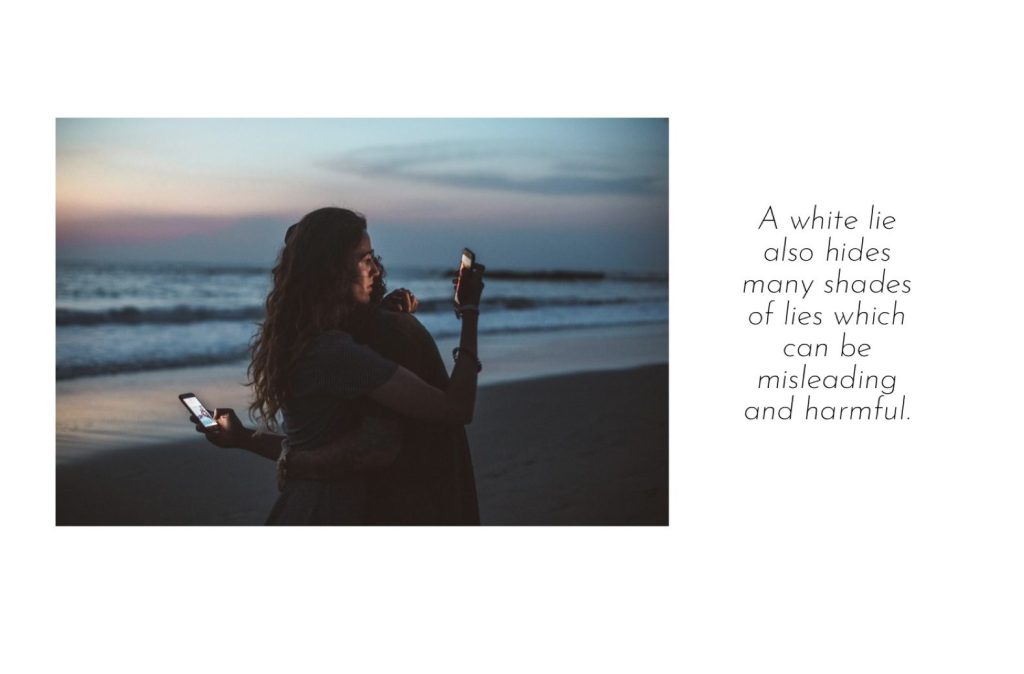
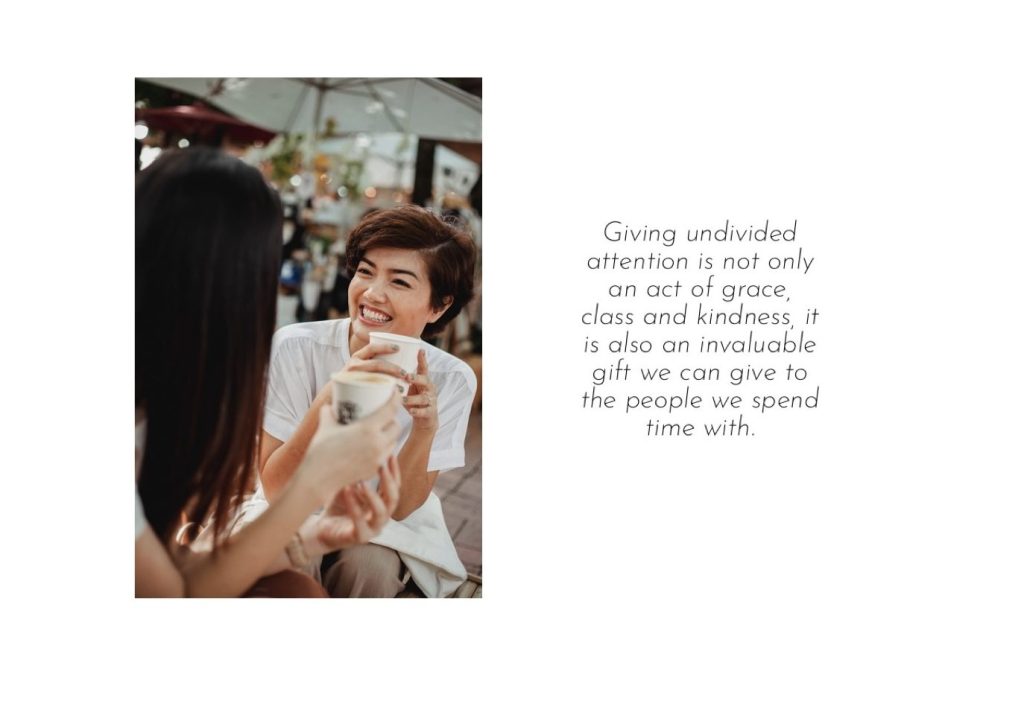
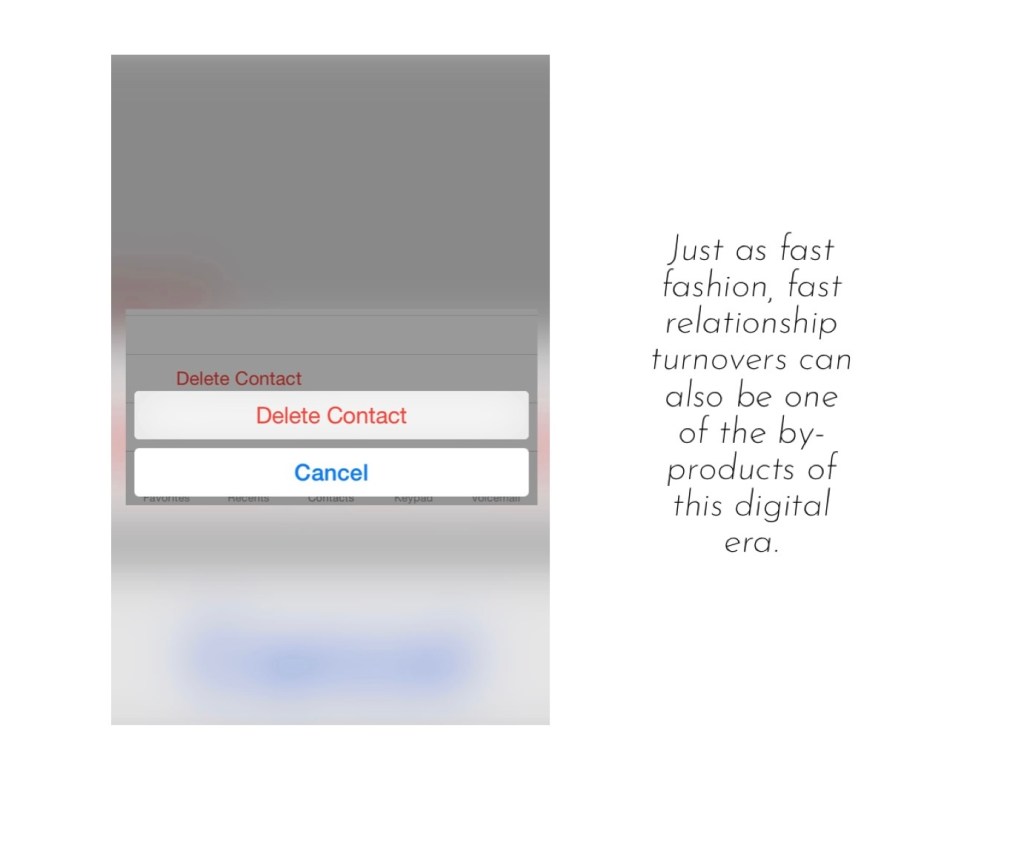
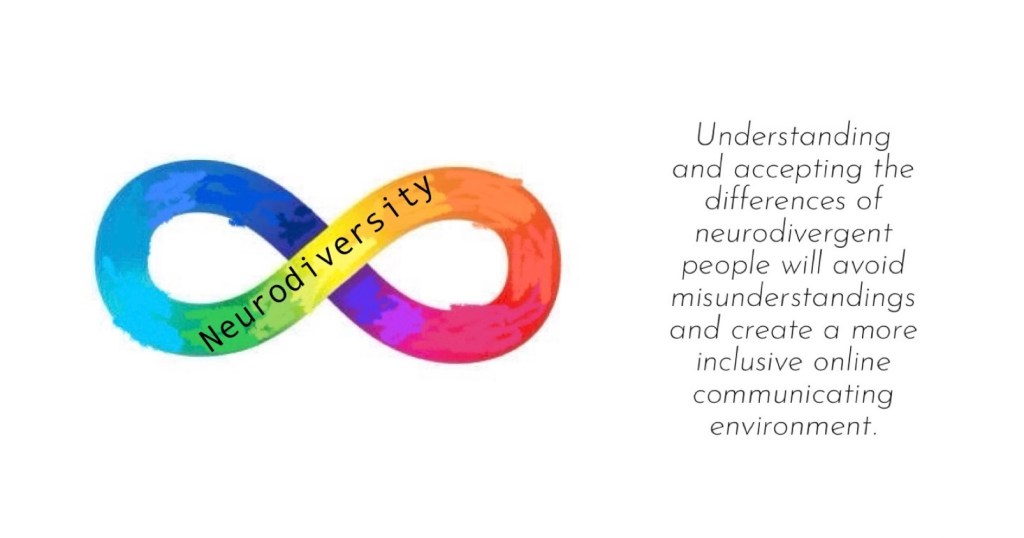
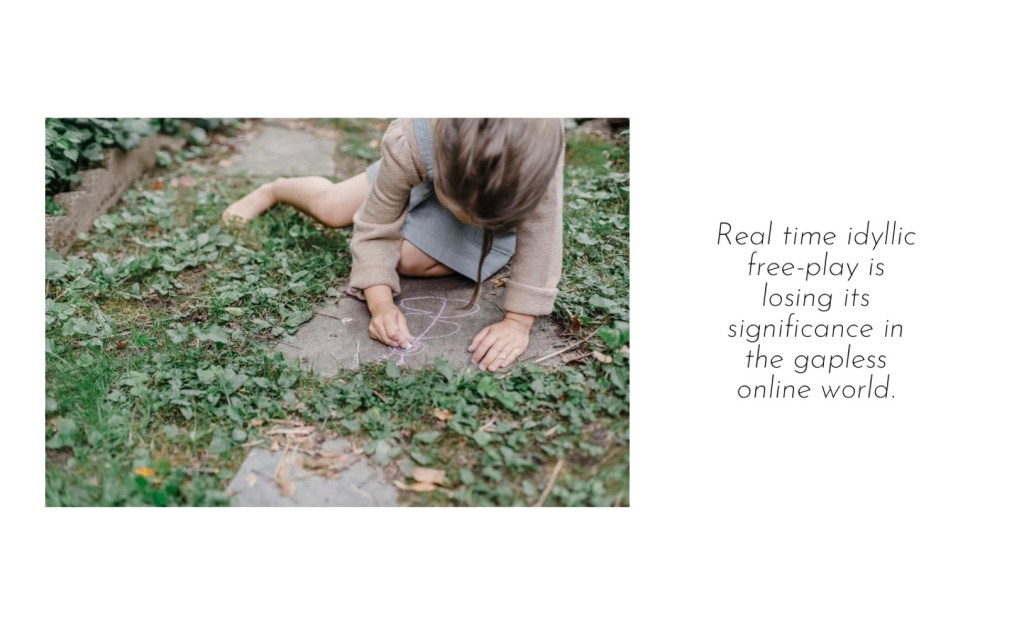
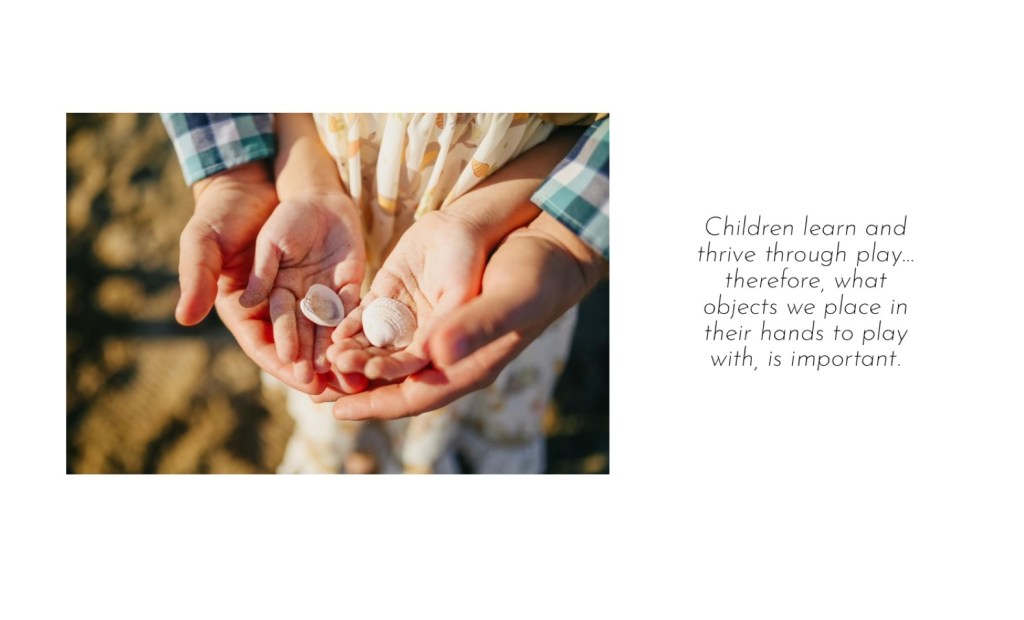
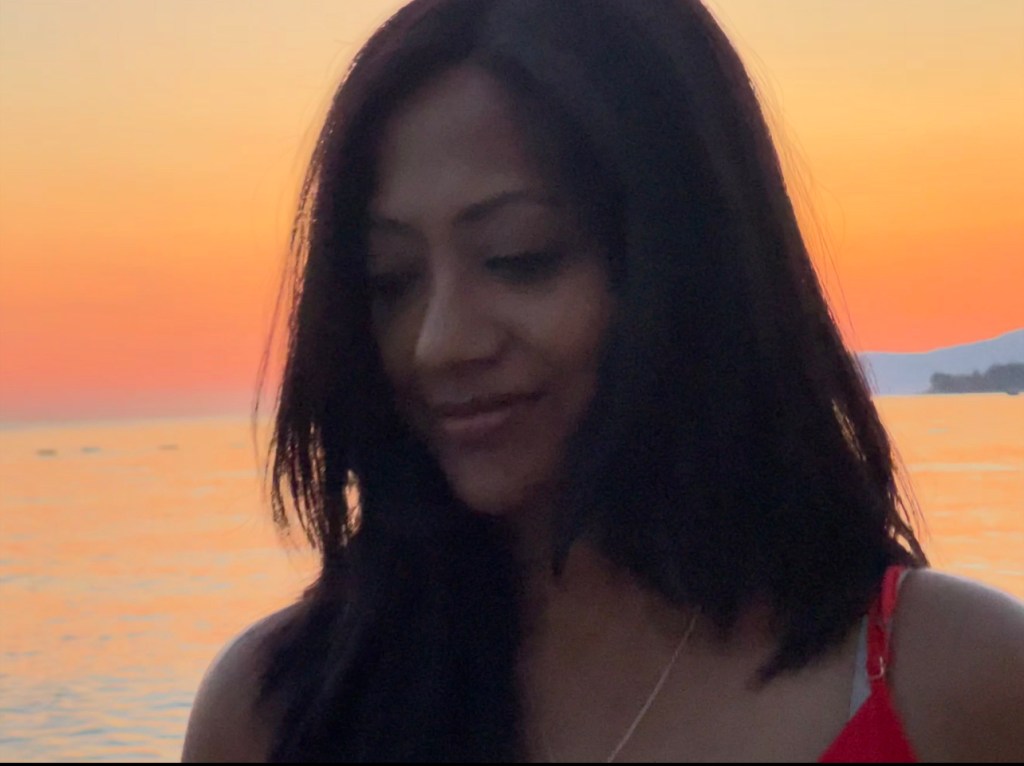
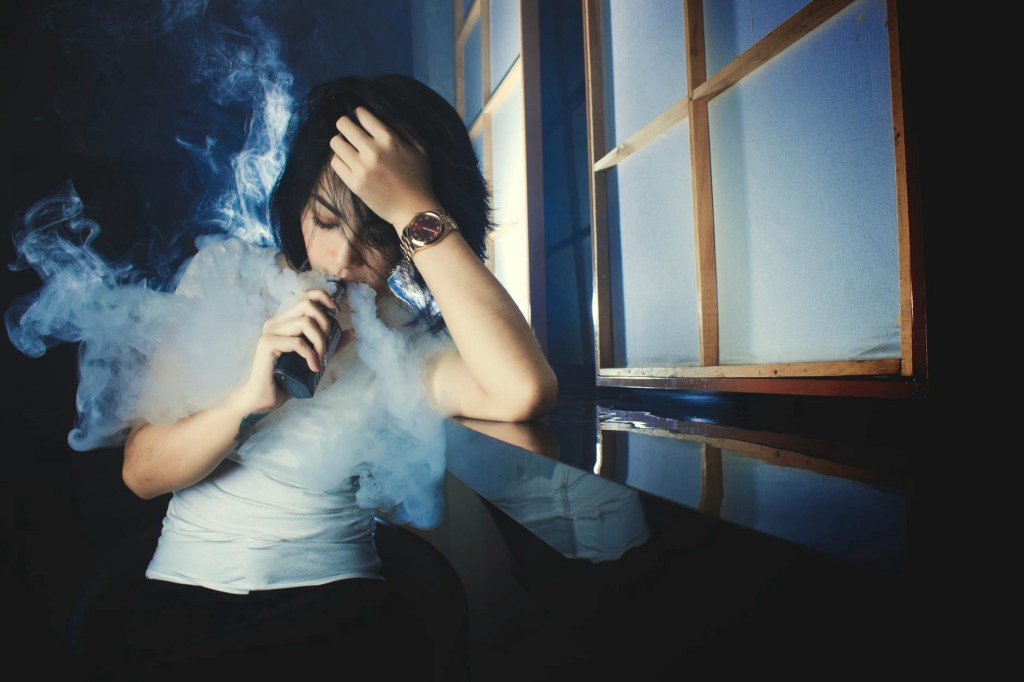

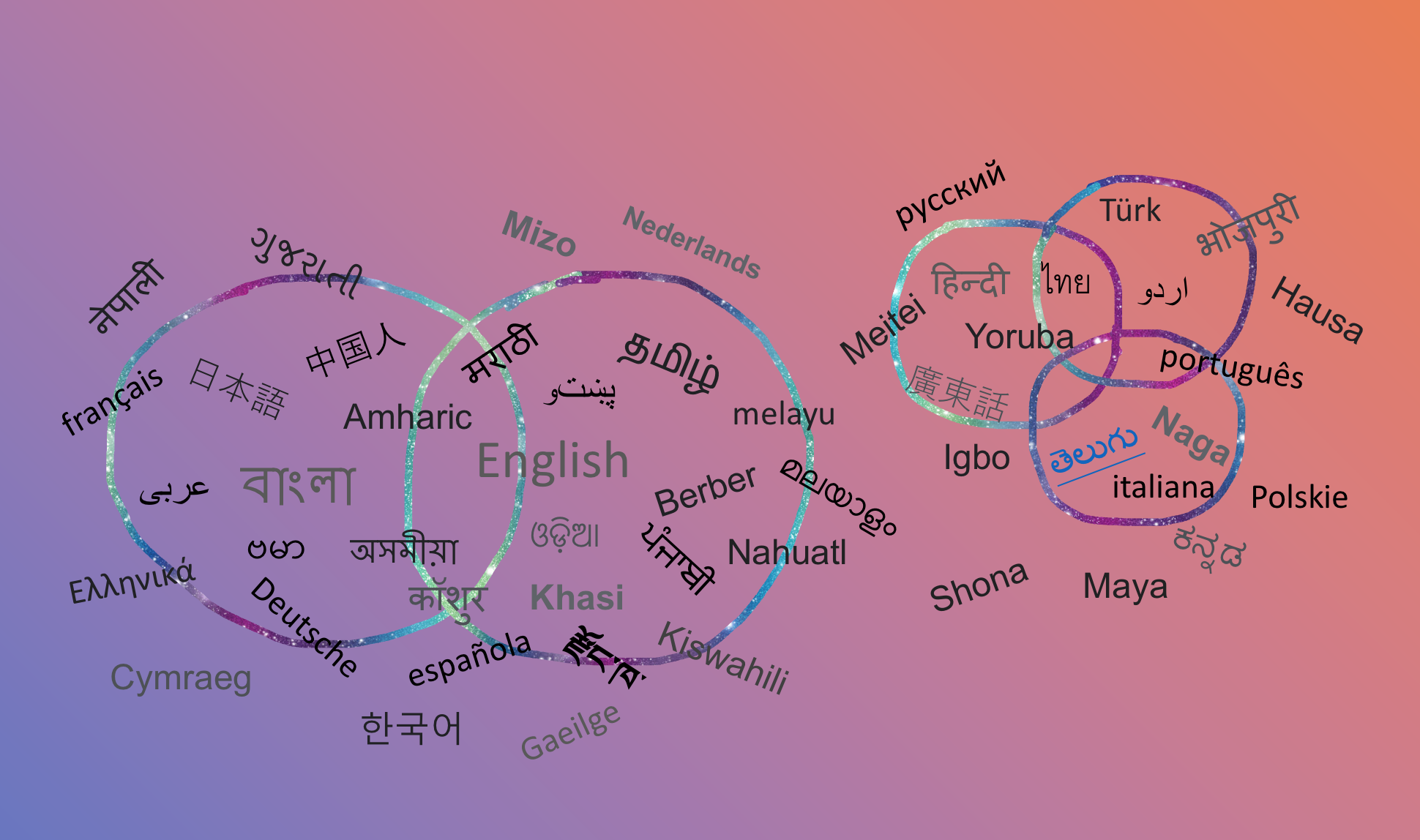 Photo by Shonali
 ShowerScape